|
|
C'est la
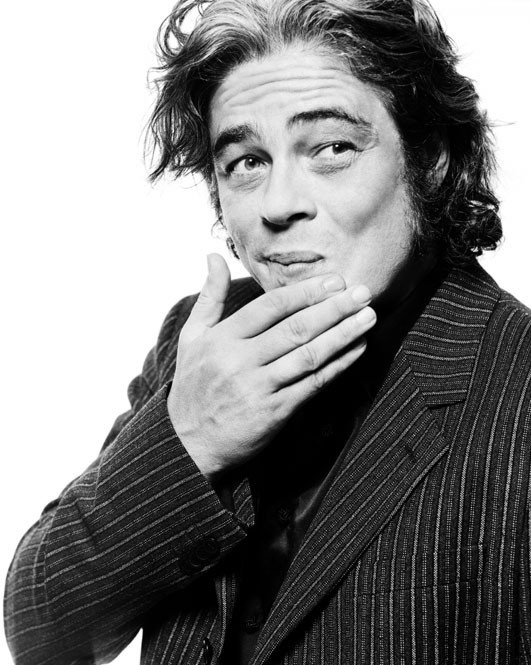
ressemblance de Benicio del Toro avec le Che qui a donné à Steven Soderbergh
l'idée de ce film de quatre heures que raconte sa productrice, Laura
Bickford
C'est
l'un des films les plus attendus du Festival : «Che», de Steven Soderbergh,
est une oeuvre ambitieuse. Laura Bickford, jeune productrice, a i suivi le
réalisateur sur plusieurs continents et, depuis sept ans, veille au
financement de ce projet à risque. Elle a été nominée aux Oscars pour
«Traffic» en 2001, où Benicio del Toro, qui incarne le Che, jouait déjà l'un
des rôles principaux.
Le Nouvel Observateur - Pourquoi un film aussi long, quatre heures
?
Laura Bickford - En fait, «Che» est constitué de deux films de deux
heures. Il y a tellement de choses à raconter sur la vie de Che Guevara que
nous ne pouvions pas nous contenter d'une durée normale. Mais le public ne
resterait plus quatre heures d'affilée, aujourd'hui, pour regarder un film
comme «Reds». Nous avons donc pris la décision de faire deux films, qui
sortiront séparément.
N.O. - Comment ce projet a-t-il commencé ?
L.B. - Un jour, Benicio del Toro est arrivé portant un T-shirt avec
l'image du Che, il y a neuf ans. Et Steven Soderbergh a réalisé qu'il lui
ressemblait de façon étonnante. Nous étions en train de préparer «Traffic»
et nous avons commencé à rechercher des documents sur le Che. Le problème
était de savoir quel film nous voulions faire. Nous sommes passés par
plusieurs scénarios et nous avons même songé à faire... trois films ! Nous
avons finalement privilégié certaines périodes de sa vie : Cuba et New York
dans la première partie, la Bolivie dans la seconde. En fait, le film débute
après la période du «Voyage à motocyclette».
N.O. - C'est un sujet qui risque de provoquer la polémique, aux
Etats-Unis et ailleurs...
L.B. - Quand nous avons tourné «Traffic», on nous a dit qu'il était
déconseillé de faire un film dont le sujet était la drogue. En ce qui
concerne «Che», nous donnons au spectateur les faits, à charge pour lui de
se faire une opinion.
N.O. - Quel est, selon vous, l'héritage du Che ?
L.B. - Son idéalisme. C'est ce que nous avons voulu mettre en avant.
Ses valeurs, sa vision, sa volonté de changer le monde.
N.O. - Vous avez eu du mal à produire le film ?
L.B. - Aux Etats-Unis, personne ne voulait mettre un dollar
là-dedans. C'est un film entièrement financé par des fonds européens. Il
nous a fallu sept ans pour rassembler l'argent. Et ça a été dur, croyez-moi.
N.O. - Ce fut le principal obstacle ?
L.B. - Non. Le plus difficile a été de rester objectif, de ne pas
réduire le personnage à sa légende. Ni à sa caricature. Ainsi, dans la
description de la révolution cubaine, nous ne pouvions pas être
superficiels. Il fallait trouver le ton, et rassembler une solide
documentation sur le contexte, sur cette Amérique latine paupérisée. De
plus, le film est en espagnol. Inutile de vous dire que les distributeurs ne
se sont pas précipités... Pas question de faire le film en anglais.
N.O. - Il y a eu un film en anglais, en 1969...
L.B. - Oui, c'était Omar Sharif qui jouait le Che. Omar Sharif !
L'homme de «Lawrence d'Arabie» et du «Docteur Jivago» ! Le casting était
incroyable...
N.O. - Avec Jack Palance dans le rôle de Fidel Castro !
L.B. - Oui. Nous avons fait très attention à ne pas tomber dans ce
genre de travers.
N.O. - Quel a été votre travail de documentation ?
L.B. - Ce fut sept ans de recherches. On a parlé à tous les
survivants. Nous avons parlé à ses enfants, à ses amis. Il reste trois
survivants de l'équipée bolivienne : nous leur avons parlé. Nous nous sommes
rendus à Cuba deux fois par an durant toute cette période. Le résultat de
toute cette documentation, c'est la découverte que Che Guevara était un
homme complexe : il était strict, rigide parfois, et en même temps
chaleureux. Très contradictoire. Il avait l'âme d'un poète et le désir de
changer les hommes. Mais il avait aussi des comportements durs à comprendre
: il était persuadé que l'Etat prendrait soin de sa femme et de ses enfants
et donc pouvait se substituer à lui. Sa famille passait après sa mission. Il
a été un révolutionnaire, un vrai. Les autres se sont installés
tranquillement et ont vécu confortablement. Pas lui : il est reparti sur les
routes.
N.O. - Sa mort l'a transformé en martyr...
L.B. - Exactement. Il est le seul personnage qu'on puisse citer, dans
le domaine politique, parvenu au pinacle et redescendu volontairement. Il a
eu le pouvoir, la gloire, et a tout abandonné pour se battre ailleurs. Ce
désintéressement est unique. Il voyait la misère des autres, il voulait les
aider, c'est tout. Les valeurs de la révolution, avec lui, étaient vivantes.
Il les incarnait.
N.O. - Et Benicio del Toro ?
L.B. - Il est le meilleur ! Il est entré dans la peau du personnage !
Il a même rencontré le dentiste qui a grimé le Che pour son entrée en
Bolivie, ainsi que le capitaine bolivien qui a capturé Guevara, puis l'agent
de la CIA qui l'a exécuté... C'est le rôle de sa vie, aucun doute. |
Top
Top
Top |
| |
It is the resemblance of Benicio
del Toro with Che that sparked in Steven Soderbergh the idea for this four
hours long film, tells its producer, Laura Bickford
It's one
of the most anticipated films of the Festival : «Che», by Steven Soderbergh,
is an ambitious piece. Laura Bickford, a young producer, followed the
director through several continents and, since seven years, she has been
taking care of the financing of this risky project. She was nominated for an
Oscar for «Traffic» in 2001, in which Benicio del Toro, who portrays Che,
already played one of the major roles.
Le Nouvel Observateur - Why such a long film, four hours?
Laura Bickford - In fact, «Che» consists of two films of two hours
each. There are so many things to tell about Che Guevara's life, that we
just could not content ourselves with a normal (average) running time. But
the audience doesn't sit down anymore for more than four hours in a row,
nowadays, to watch a film like «Reds». Hence we have eventually taken the
desicion to make two films, that are going to be released separately.
N.O. - How did this project get started?
L.B. - One day, Benicio del Toro arrived wearing a T-shirt with Che's
image on it, nine years ago. And there Steven Soderbergh realized that he
resembles him in an uncanny way. We were working on preparing «Traffic» and
we started to research documents about Che. The problem was to figure out
what kind of film we wanted to make. We went through several possible
scenarios and at one point we even pondered to make... three films!
Eventually we chose certain periods of his life: Cuba and New York in the
first part, Bolivia in the second one. In fact, the film starts after the
period portrayed in «The Motorcycle Diaries».
N.O. - It is a topic with the risk to cause polemic, in the United
States and elsewhere...
L.B. - When we produced «Traffic», we were told that it is not
advisable to make a film about the topic of drugs. When it comes to «Che»,
we are giving the spectator the facts and we are leaving it up to him/her to
form an opinion of his/her own.
N.O. - What is, according to you personally, the legacy of Che?
L.B. - His idealism. And that's what we have wanted to put forward.
His values, his vision, his will to change the world.
N.O. - Did you have a hard time to produce this film?
L.B. - In the United States, nobody wanted to invest a dollar into
this project. It is a film which is entirely financed with Europeen funds.
It took us seven years to raise the money. And that was hard, believe me.
N.O. - Was that the biggest obstacle?
L.B. - No. The most difficult thing was to stay objective, to not
reduce the person to his legend. Nor to a caricature of him. Hence, in the
description of the Cuban Revolution, we could not be superficial. It was
necessary to find the right tone, and to compile a solid documentation of
the context, about this poverty-stricken Latin America. Additionally, the
film is in Spanish. Unnecessary to tell you, that distributors are not
jumping the gun when it comes to that... There was no way to make this film
in English.
N.O. - There was a film in English, in 1969...
L.B. - Yes, it was Omar Sharif who played Che. Omar Sharif! The man
from «Lawrence of Arabia» and «Doctor Zhivago»! The casting was
unbelievable...
N.O. - With Jack Palance in the role of Fidel Castro!
L.B. - Yes. We paid much attention to not go into that kind of
direction.
N.O. - What was your documentation work like?
L.B. - It took seven years of research. We have talked to all the
survivors. We have spoken with his children, with his friends. There are
three survivors of the Bolivian group: we have spoken with them. We traveled
to Cuba twice a year during that whole period. The conclusion of this whole
documentation work, is the discovery that Che Guevara was a complex man: he
was strict, rigid sometimes, and at the same time also cordial. Very
contradictive. He had the soul of a poet and the desire to change mankind.
But he also had behavioural patterns that are difficult to understand: he
was convinced that the State would care for his wife and his children and
hence they could do without him. His family came after his mission. He was a
revolutionary, a true one. The others settled down quietly and lived
comfortably. Not he: he went back to the road.
N.O. - His death transformed him into a martyr...
L.B. - Exactely. He is the only person you could cite, in the
political domain, who, once he had reached the peak, redescended voluntarly.
He had the power, the glory, and he gave up all this to go battle elsewhere.
That kind of unselfishness is unique. He saw the misery of others, he wanted
to help them, that's all. The values of the revolution were alive with him.
He was their personification.
N.O. - And Benicio del Toro?
L.B. - He is the best! He entered the skin of the personage! He even
met with the dentist who made up Che for his entry to Bolivia, as well as
the Bolivian Captain who captured Guevara, and also the CIA agent who
executed him... It is his role of a lifetime, without any doubt. |
Top
Top
Top |